
Case study
Inboxy AI
Inboxy AI, our own product: an AI knowledge inbox that turns shared links, videos, PDFs and voice notes into summaries, tags and a daily digest — a Telegram bot and a native iOS app on one knowledge base.
Inboxy AI. Save anything. Remember everything.
- Telegram bot
- iOS app
- Android and web — next
An AI inbox for everything you meant to come back to
Share a link, a video, a PDF or a voice note and Inboxy extracts the key points, tags and files it, and finds it again by meaning — in a Telegram bot and a native iOS app, built on one shared knowledge base.
From a shared link to a briefing
Four stages, each with a fallback, so a TikTok without captions gets the same treatment as a well-formed article.
Save
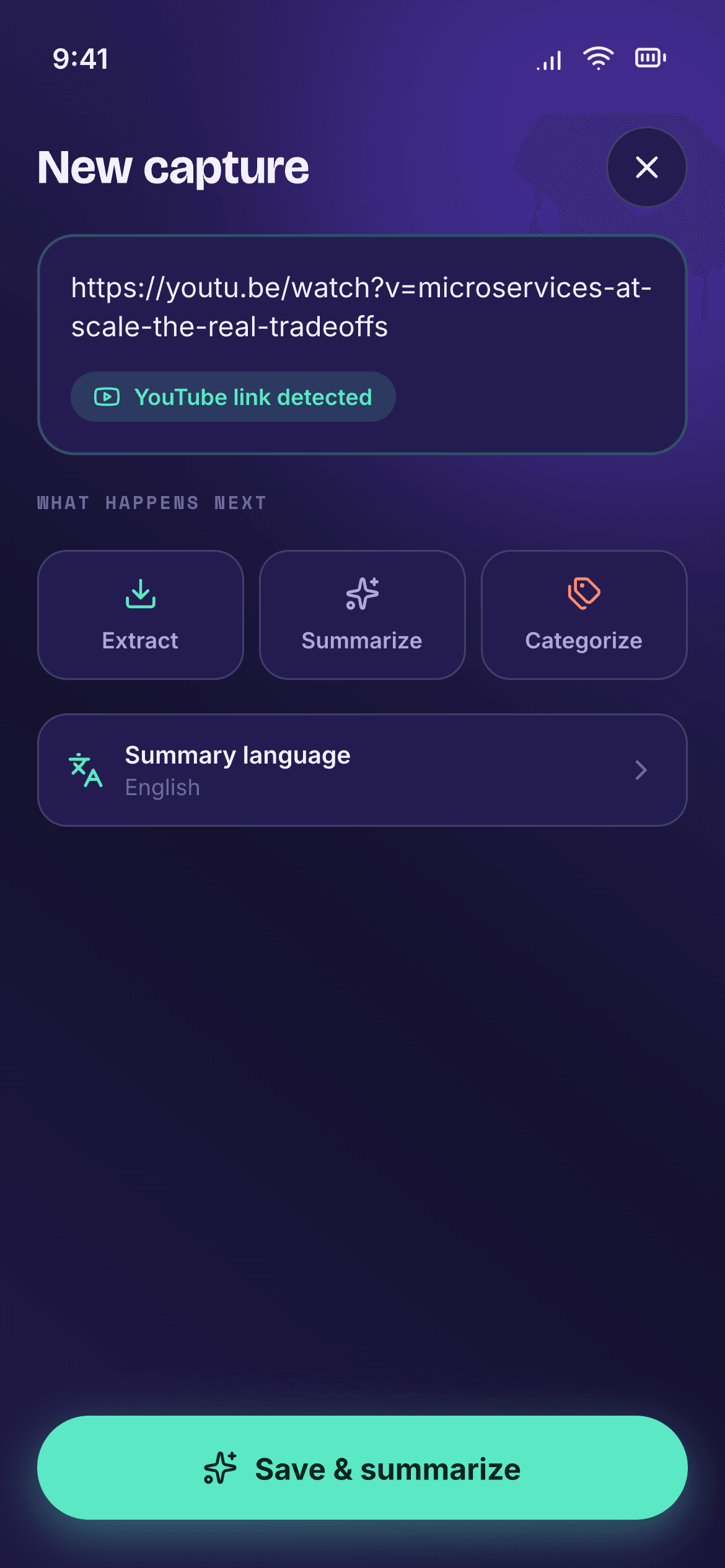
Share from any app on the phone, or drop a link, a forwarded post, a PDF or a voice note into the Telegram chat.
Extract
A cascade of extractors: native subtitles, yt-dlp plus Whisper, a headless browser, and Gemini Vision reading text off video frames when nothing else works.
Understand
A one-line gist, key points and actions; a title, category and tags; a quality score; a 3,072-dimension embedding for search by meaning.
Return
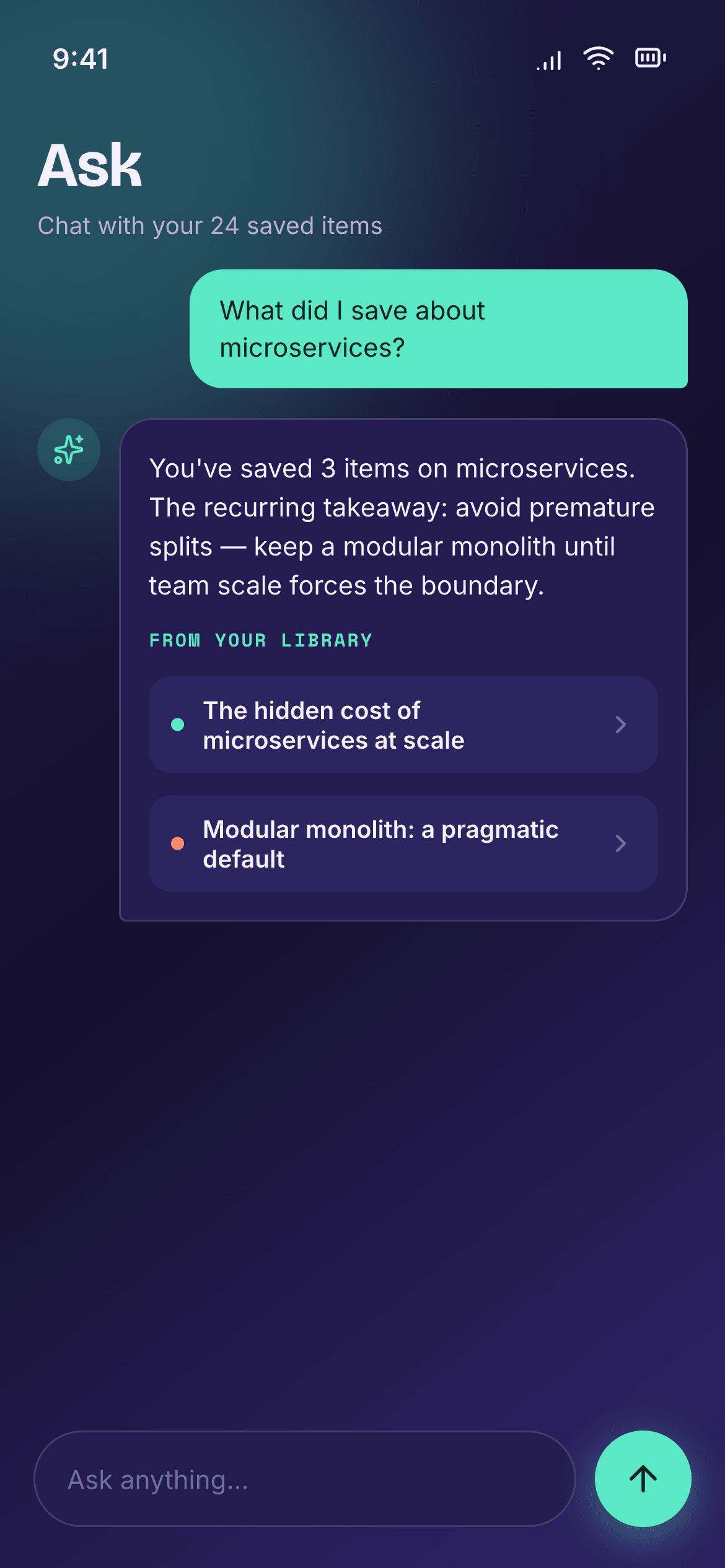
Semantic and hybrid search, /ask answers with their sources, duplicate and related-item detection, and a daily digest.
Sources it understands
- YouTube
- TikTok
- Threads
- Telegram posts
- GitHub
- Notion
- Any web page
- Voice notes
- PDF and text
Telegram first: zero-friction saving
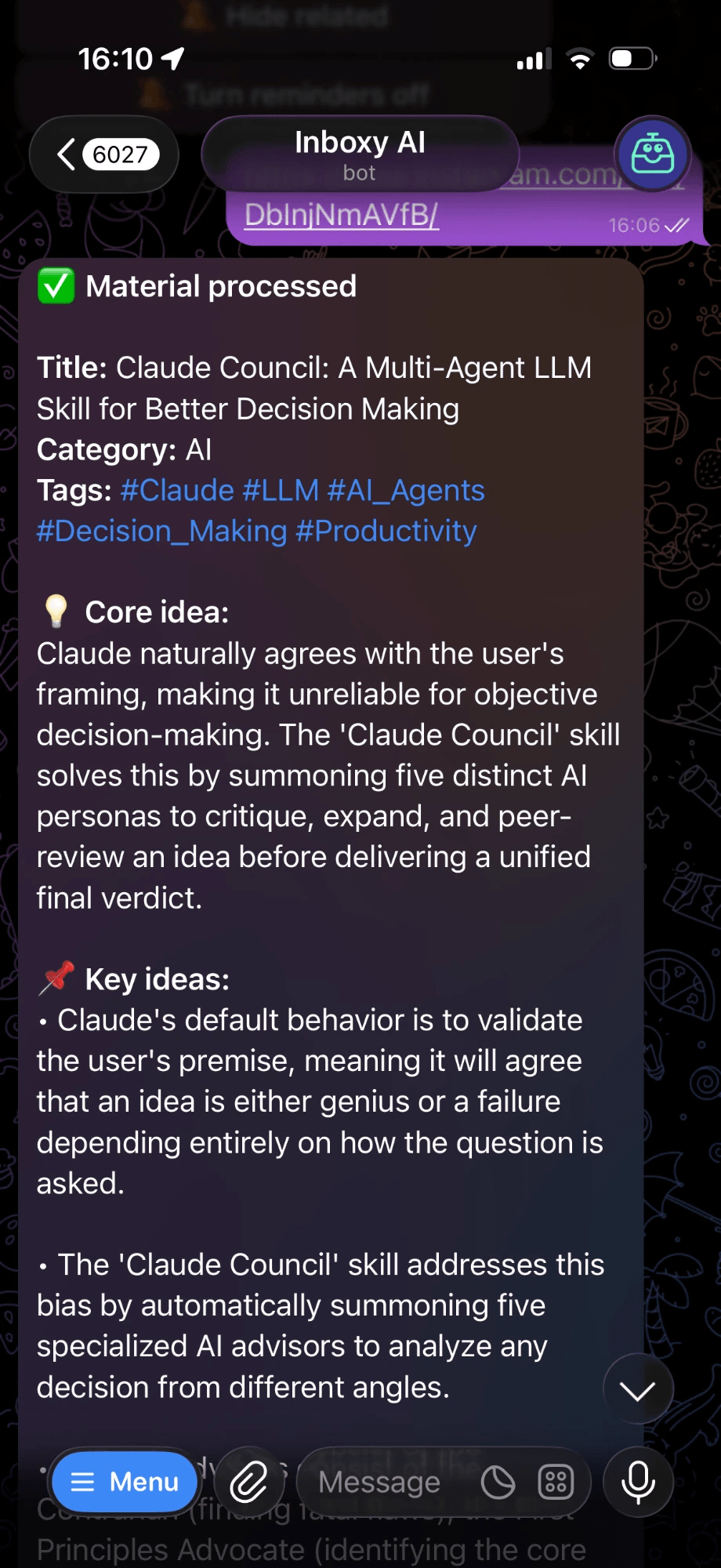
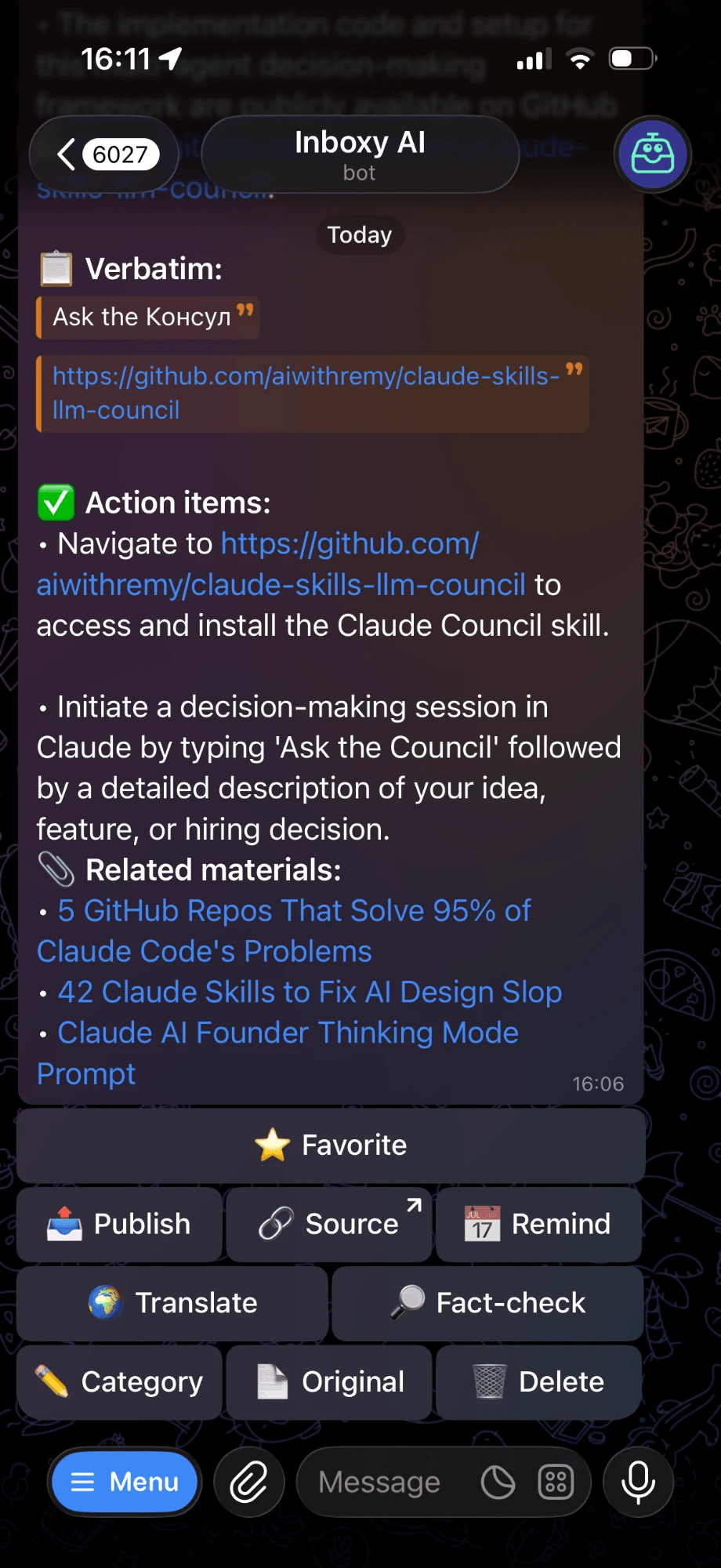
The bot is where the product started. Forward a post, paste a link or send a voice message; the status message updates live while the worker extracts and summarises, then the summary comes back with actions — ask, related, fact-check, share.
A native app for the rest of your phone
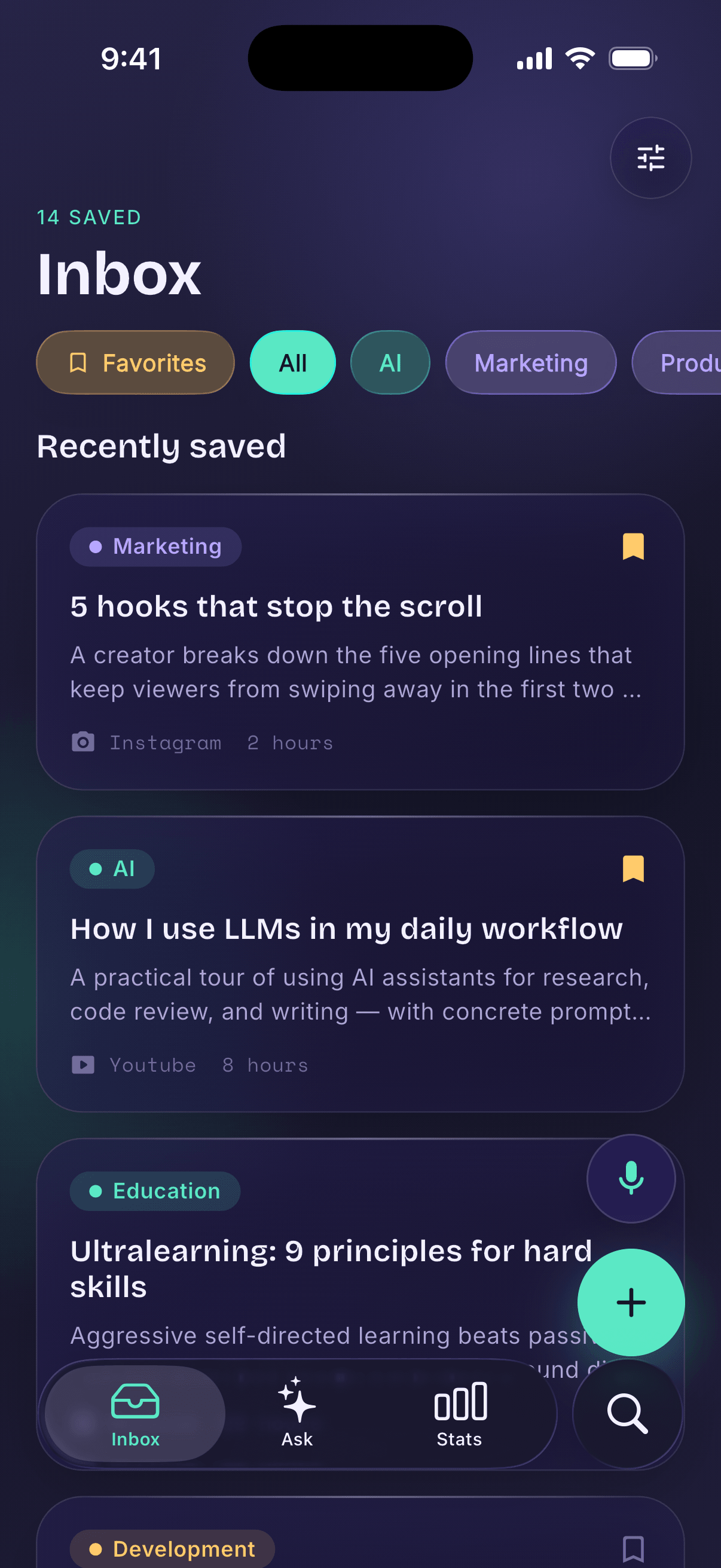
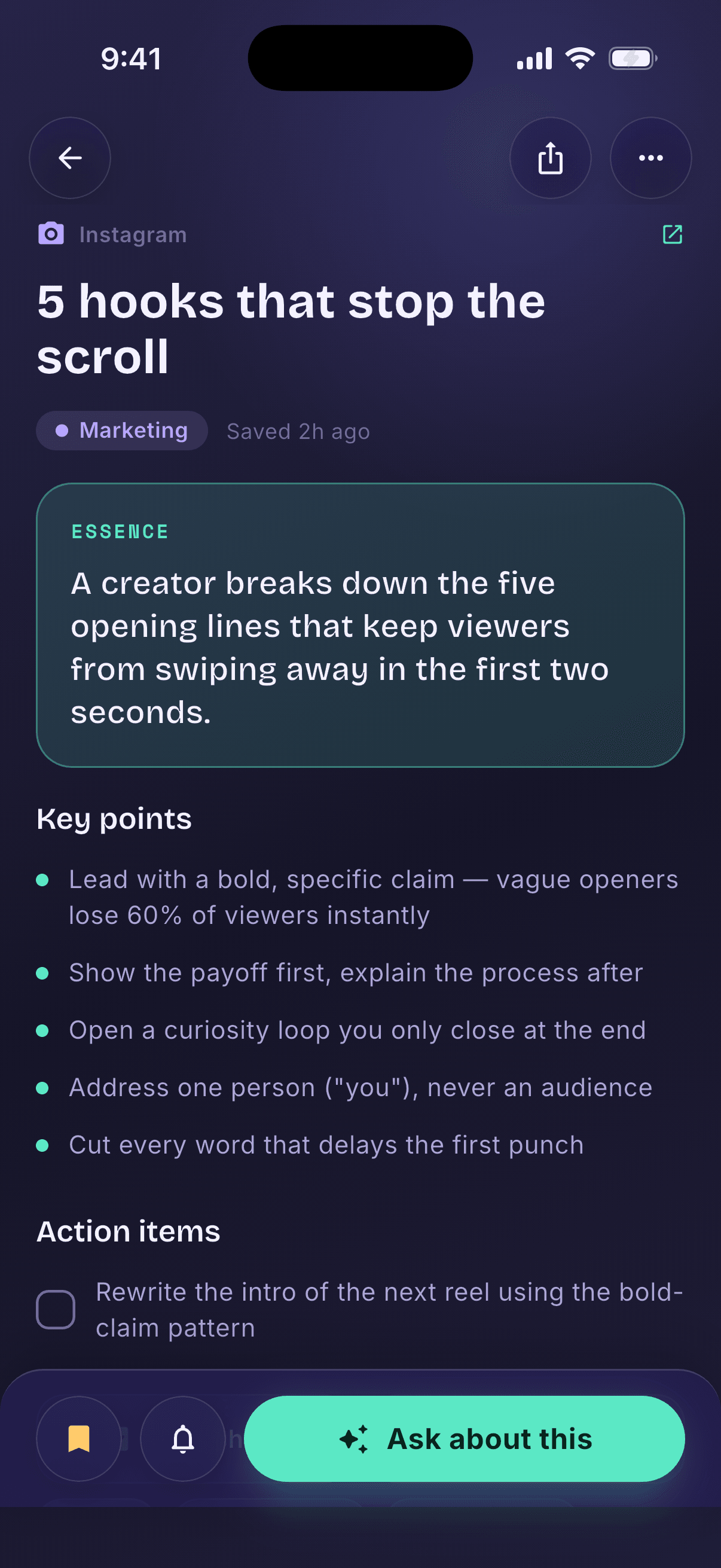
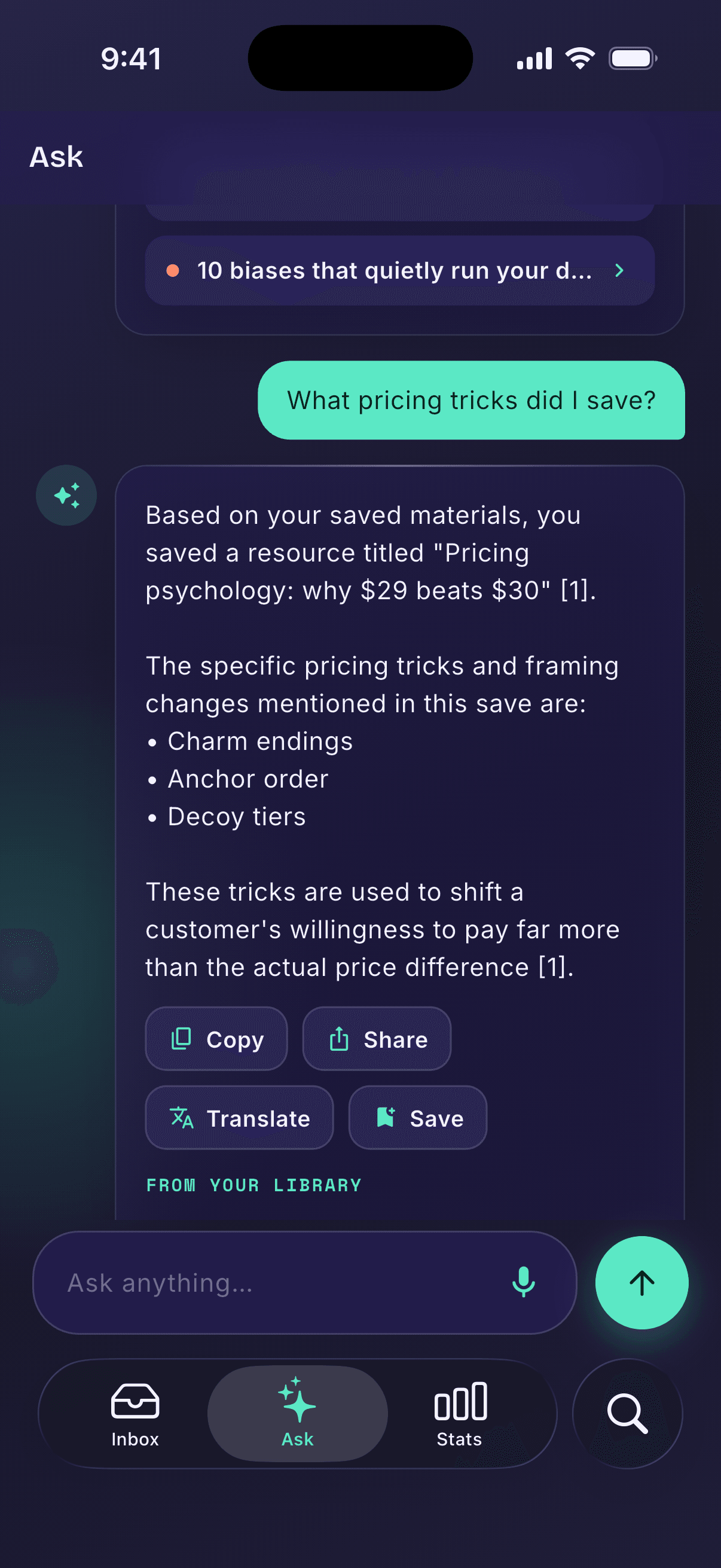
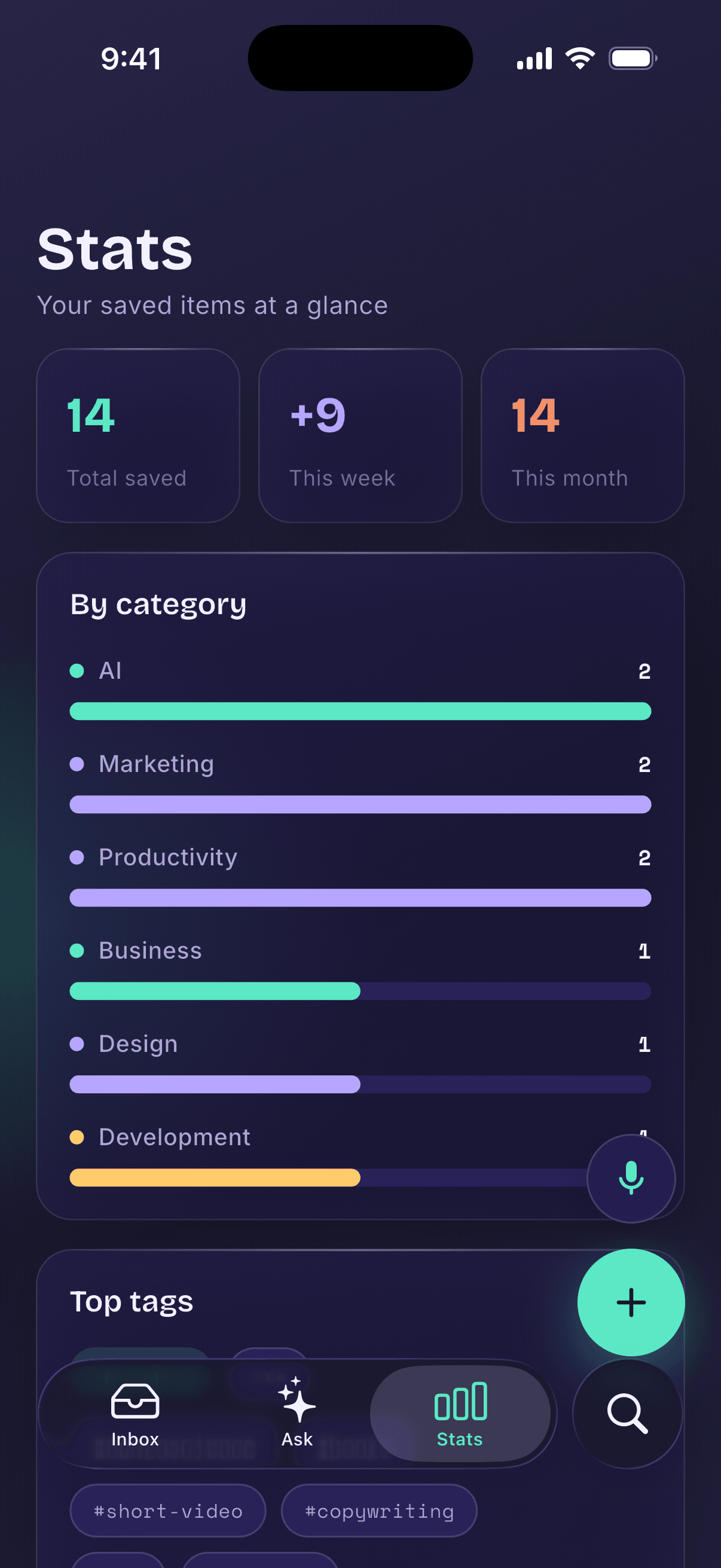
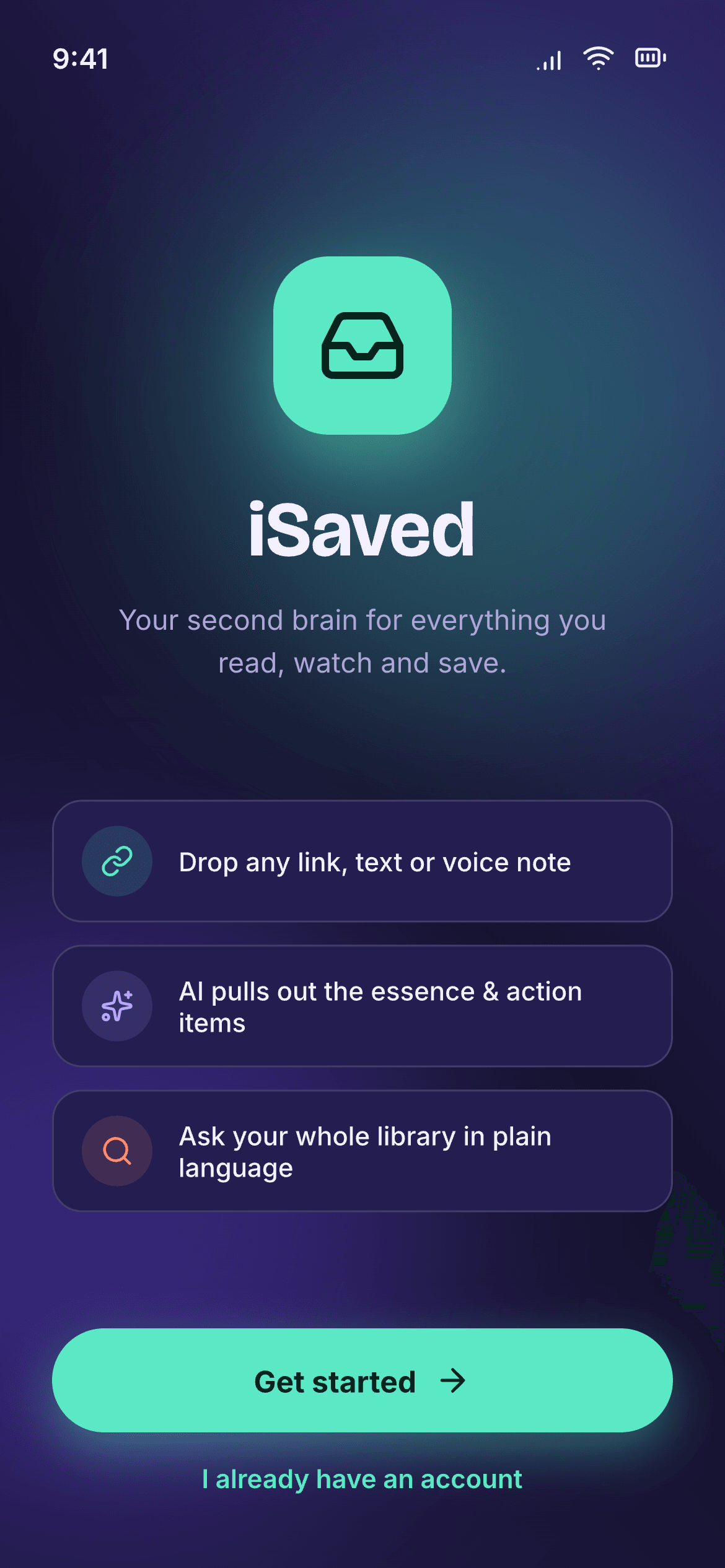
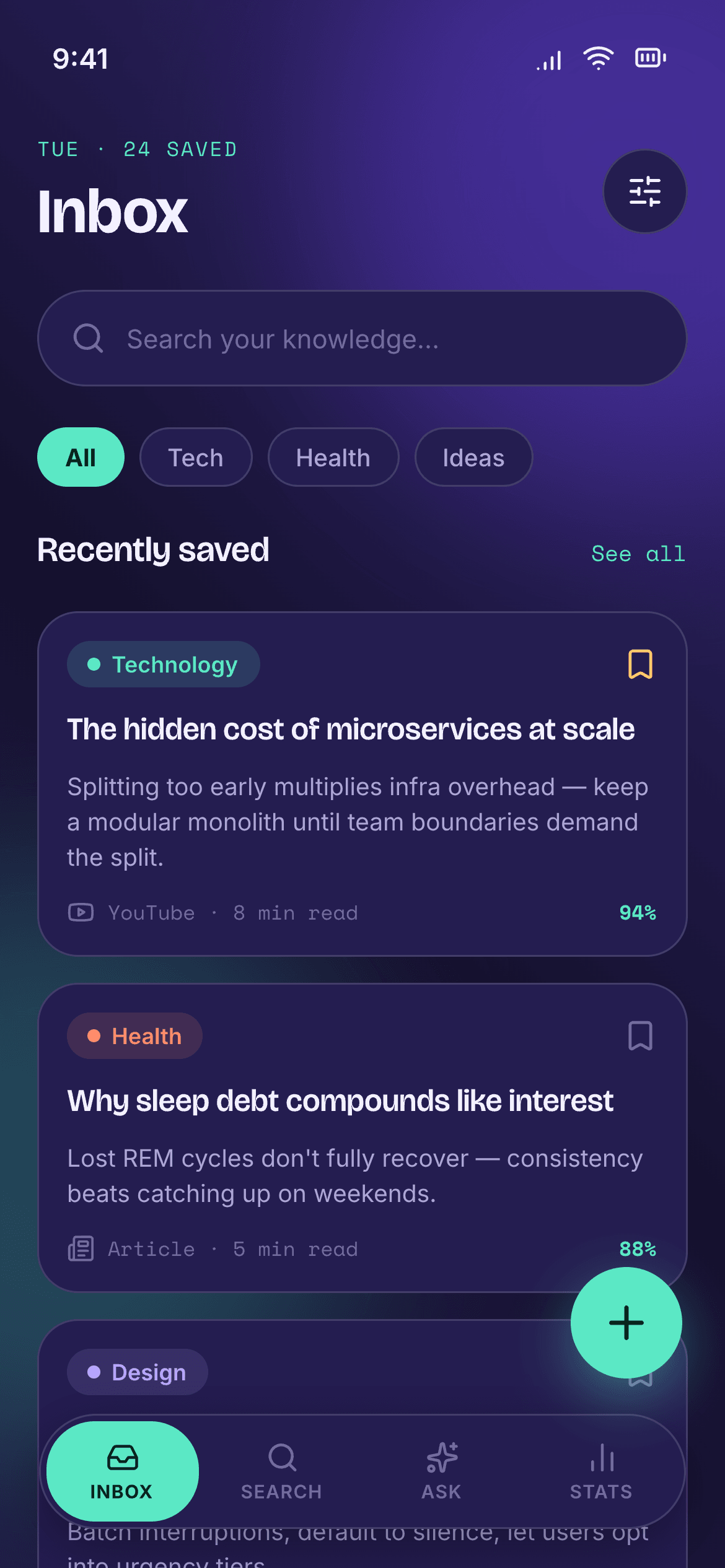
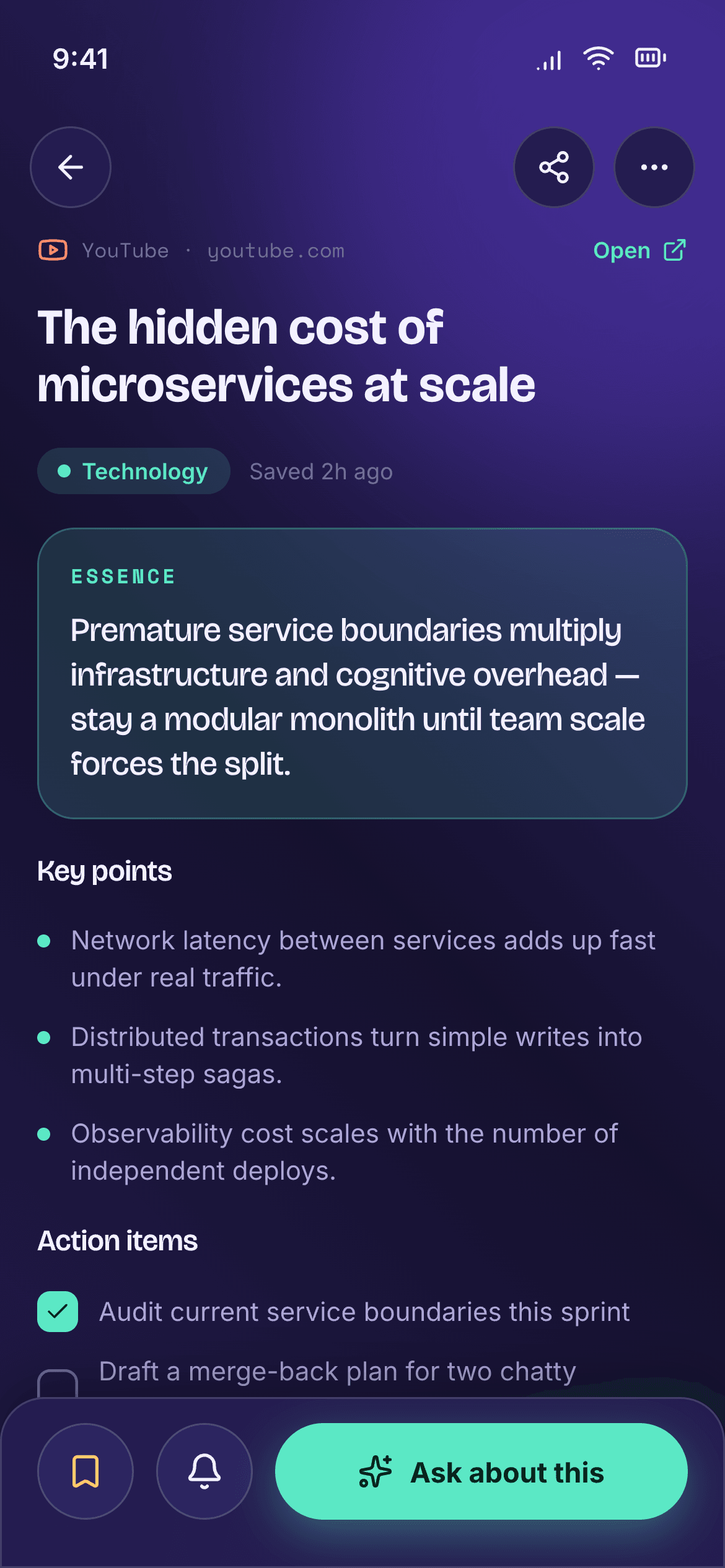
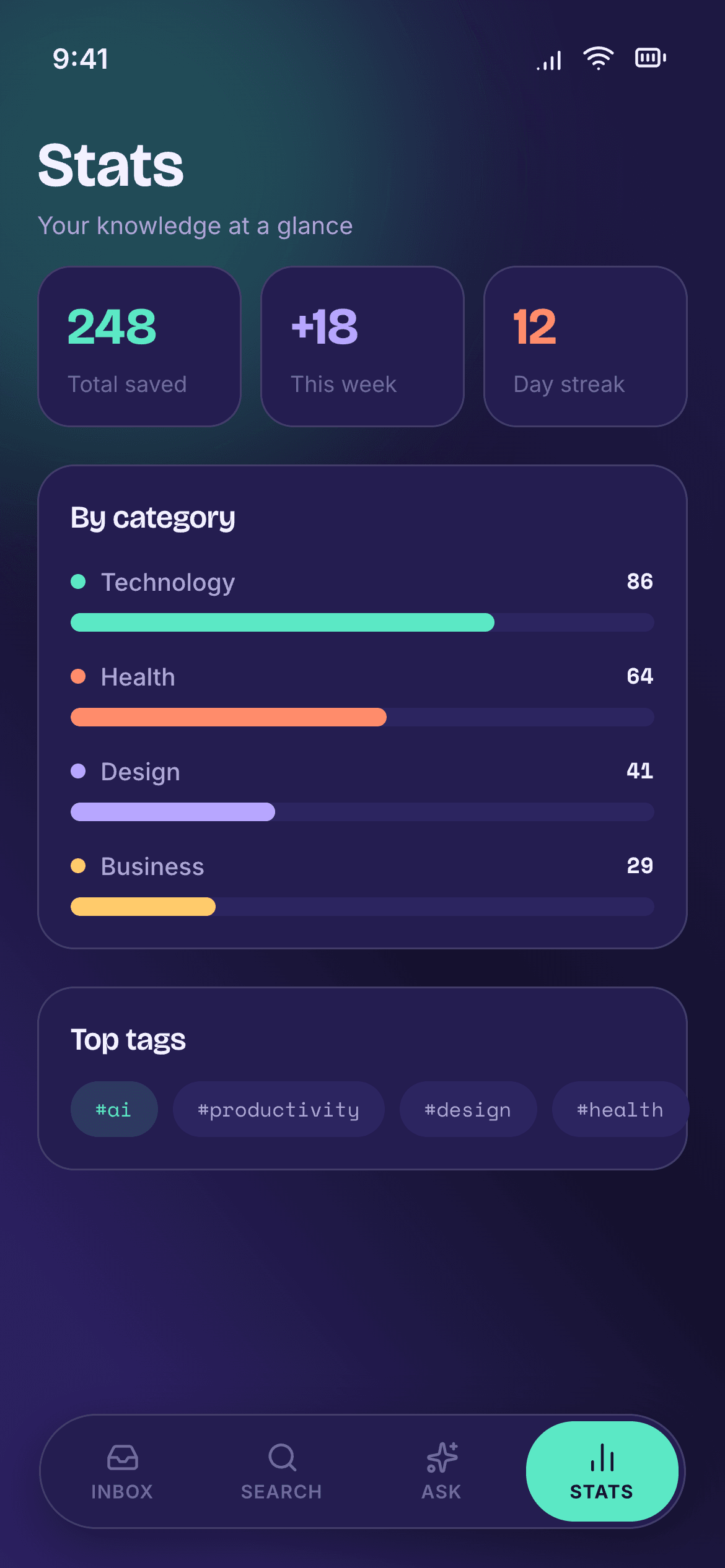
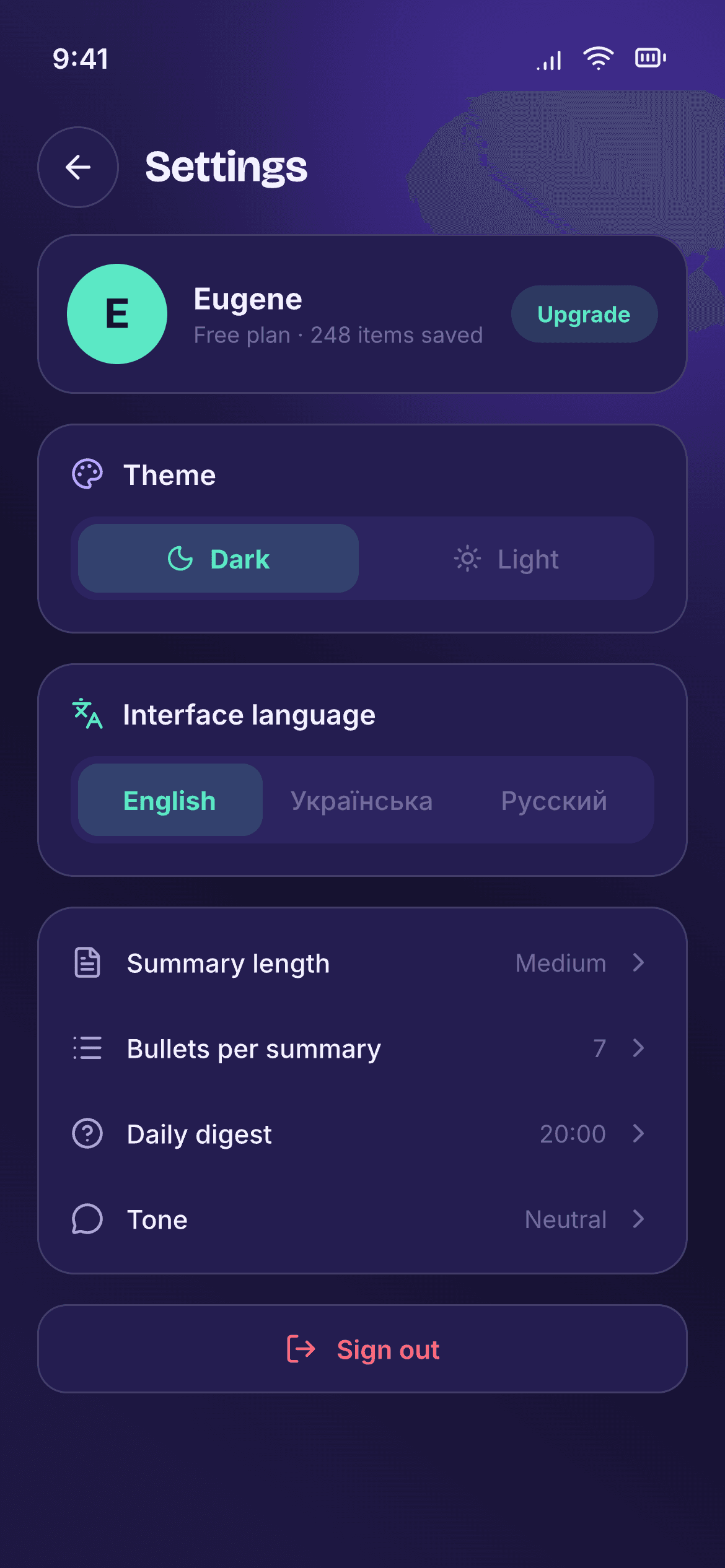
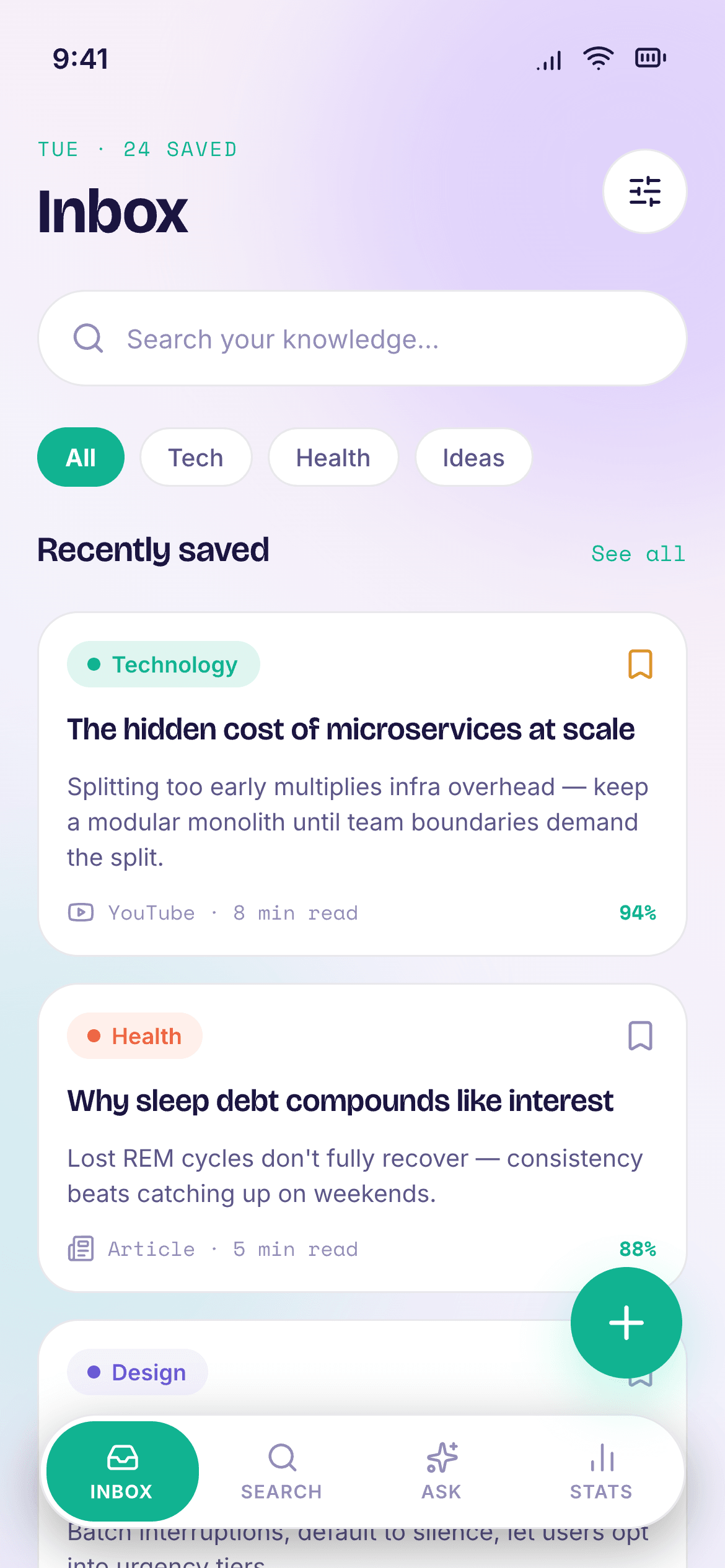
A Flutter app with a share extension, so anything on the phone can be saved without opening the chat: inbox with inline search and favourites, item pages with per-item questions, fact-check and translate, voice notes and screenshot capture, and stats.
Designed in Pen, screen by screen
Dark and light themes, an editorial component set, and the brand type — Bricolage, Inter and Space Mono — carried from the design file into the app.
Seven services, one Postgres
It began as a single bot and grew into an ecosystem: the bot core, an extractor on the host, the mobile app, an admin dashboard and three social monitors for YouTube, Instagram and Threads — all around the same database.
Bot and queue
grammY on Node and TypeScript; BullMQ on Redis so the bot answers instantly and the heavy work runs in a worker with a live status message.
One database
PostgreSQL with pgvector — vector search inside the database, Drizzle for typed queries and additive migrations.
AI
Google Gemini for summaries and categorisation, gemini-embedding-001 for embeddings; Groq Whisper and a local Whisper for speech.
Extractor service
Runs on the host, not in Docker: it needs Chrome DevTools, yt-dlp, ffmpeg and local Whisper. The bot reaches it over the Docker host bridge.
Mobile app
Flutter with a native share extension; sign-in with Apple, Google, an email code, or one tap from Telegram through a deep link and a match code; voice notes and screenshot capture.
Delivery
Multi-stage Docker builds; a merge into main deploys to production and applies the migrations — no manual steps.
What the product refuses to do
The engineering that mattered most was not capturing content — it was earning trust and bringing people back.
Trust, then verify
Placeholder or too-short content never reaches the model — the bot returns an honest stub instead. Prompts forbid guessing; every summary carries a quality score.
A briefing, not a backlog
People save eagerly and rarely come back. The daily digest, reviews, reminders and related-item links exist to bring the value back to them.
Search the way you think
Hybrid retrieval — text match plus vector similarity — ranked by relevance, freshness, the user’s own ratings and extraction quality.
No lock-in
The whole knowledge base exports to Markdown and JSON at any time. Free covers 50 saves a month; a Pro plan for heavy savers is on the way.
Six months from the first commit
- Mar 2026First commit. The pipeline moves to the Gemini API on day one.
- Apr 2026The busiest month: the Instagram and YouTube monitors, the admin dashboard, automatic migrations on deploy, and the rename from iSaved to Inboxy AI.
- May 2026The Flutter app: voice notes and screenshot capture, fact-check and translate, native share, tappable answer sources.
- Jun 2026Free and Pro limits, export without lock-in, spaced-repetition review, a single to-do list.
- Sep 2026inboxyai.app, the API behind HTTPS, sign-in with Apple and Google, and the iOS app on its way to the App Store.

Inboxy AI × Jellyworkz
Our own product: the bot, the pipeline, the app and the design, built and run by Jellyworkz. Free at inboxyai.app and t.me/InboxyAIBot.
The idea
Everyone saves links and nobody comes back to them. Inboxy AI is Jellyworkz’s own answer: share anything to a Telegram bot or the iOS app, get the key points, a category and tags back within seconds, and find it again later by meaning rather than by keyword — with a daily digest that brings the value back instead of leaving a backlog.
What we built
A Telegram bot on grammY with a BullMQ worker and live status updates; an extractor service running a cascade of strategies — native subtitles, yt-dlp with Whisper, a headless browser, Gemini Vision on video frames — for YouTube, Instagram, TikTok, Threads, Facebook, Telegram, GitHub, Reddit, Notion and any web page; summarisation, categorisation, quality scoring and 3,072-dimension embeddings on Gemini; hybrid search and /ask answers with sources over PostgreSQL and pgvector; a Flutter iOS app with a share extension, voice notes and one-tap sign-in; an admin dashboard and three growth monitors — seven services around one database, deployed automatically on every merge.
Where it stands
Six months from the first commit to a product with Free and Pro plans, export without lock-in, and three languages. The Telegram bot is live at t.me/InboxyAIBot, the iOS app is built and heading to the App Store, and Android and web clients are next.